WDX-180
Web Development X
Week 34 | Full Stack Project
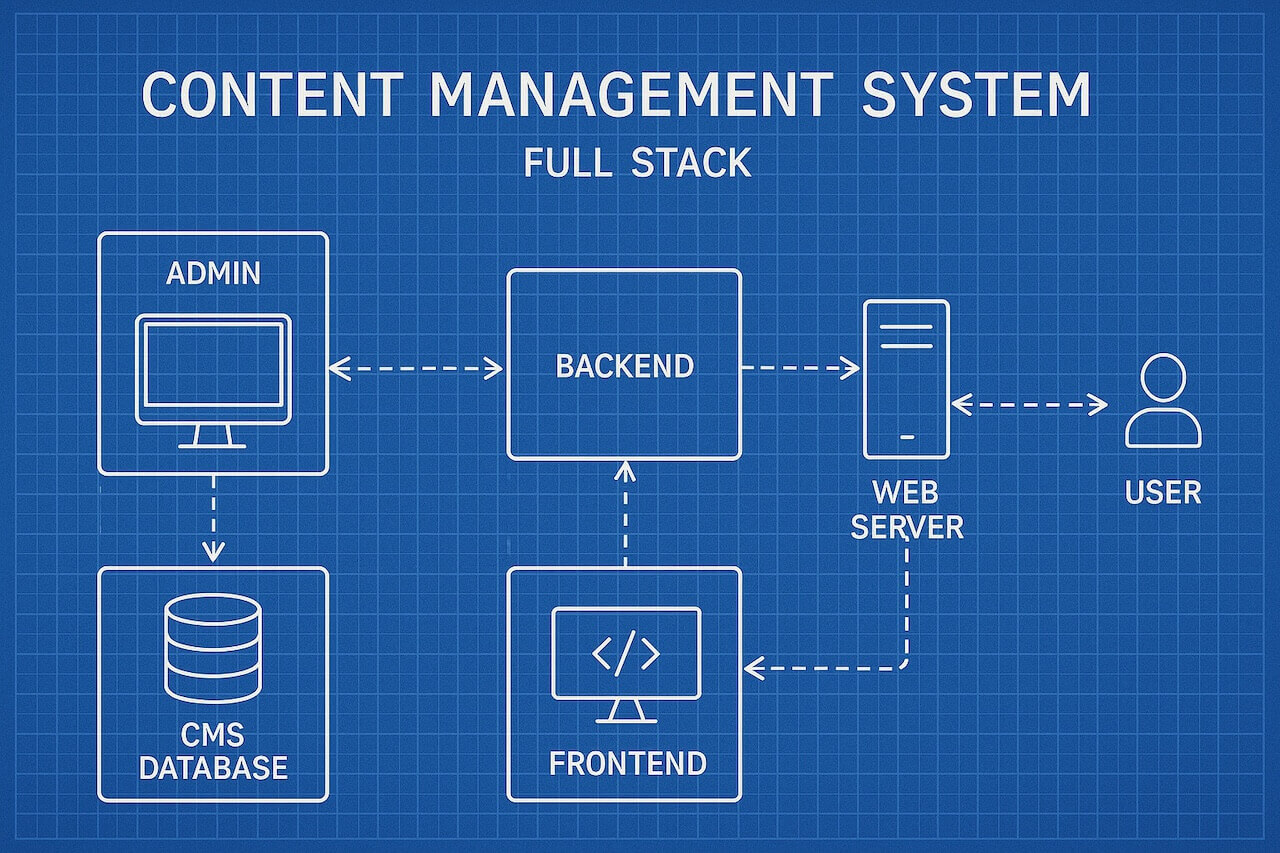
Week 34 - Day 1 | Full Stack Project - Part 1
Schedule
- Study the suggested material
- Practice on the topics and share your questions
Study Plan
Study Part 1 of the Full Stack Project series:
Express + EJS Fundamentals
By the end of this lesson, students will be able to:
- Explain the difference between a web server and a web application.
- Explain what Express.js does and why it exists.
- Create and configure an Express application.
- Understand HTTP requests and responses.
- Serve static files using Express middleware.
- Configure EJS as a template engine.
- Render dynamic HTML using data from JavaScript.
- Create reusable layouts and partials.
- Understand the purpose of middleware.
-
Build a small server-rendered application from scratch.
- ➡️ Part 1 - Express + EJS Fundamentals
- Part 2 - Planning, Architecture & Diagrams
- Part 3 - Public Routes & Basic CRUD
- Part 4 - Single Product Pages & Database-Driven Routing
- Part 5 - Creating Products (CREATE)
- Part 6 - Pagination
- Part 7 - Search & Filtering
- Part 8 - Updating Products (UPDATE)
- Part 9 - Deleting Products (DELETE)
- Part 10 - File Uploads & Image Management
- Part 11 - Authentication & Login Systems
- Part 12 - Authorization, Roles & Permissions
- Part 13 - Validation, Error Handling & Defensive Programming
- Part 14 - Testing Express Applications
- Part 15 - Deployment, Production & Launching Your CMS
Week 34 - Day 2 | Full Stack Project - Part 2
Schedule
- Study the suggested material
- Practice on the topics and share your questions
Study Plan
Study Part 2 of the Full Stack Project series:
Planning, Architecture & Diagrams
By the end of this lesson, students will be able to:
- Understand software architecture fundamentals
- Explain separation of concerns
- Understand MVC architecture
- Design a relational database schema
- Understand primary keys and relationships
- Organize an Express application into modules
- Use Express Router
- Design route structures before implementation
- Create architecture diagrams
-
Plan a CRUD application before writing code
- Part 1 - Express + EJS Fundamentals
- ➡️ Part 2 - Planning, Architecture & Diagrams
- Part 3 - Public Routes & Basic CRUD
- Part 4 - Single Product Pages & Database-Driven Routing
- Part 5 - Creating Products (CREATE)
- Part 6 - Pagination
- Part 7 - Search & Filtering
- Part 8 - Updating Products (UPDATE)
- Part 9 - Deleting Products (DELETE)
- Part 10 - File Uploads & Image Management
- Part 11 - Authentication & Login Systems
- Part 12 - Authorization, Roles & Permissions
- Part 13 - Validation, Error Handling & Defensive Programming
- Part 14 - Testing Express Applications
- Part 15 - Deployment, Production & Launching Your CMS
Week 34 - Day 3 | Full Stack Project - Part 3
Schedule
- Study the suggested material
- Practice on the topics and share your questions
Study Plan
Study Part 3 of the Full Stack Project series:
Public Routes & Basic CRUD
By the end of this lesson, students will be able to:
- Create a SQLite database
- Design and create tables
- Seed a database with sample data
- Connect Express to SQLite
- Execute SQL queries
- Display records using EJS
- Understand basic CRUD database operations
- Separate database logic from routes
-
Build the “Read” portion of a CMS
- Part 1 - Express + EJS Fundamentals
- Part 2 - Planning, Architecture & Diagrams
- ➡️ Part 3 - Public Routes & Basic CRUD
- Part 4 - Single Product Pages & Database-Driven Routing
- Part 5 - Creating Products (CREATE)
- Part 6 - Pagination
- Part 7 - Search & Filtering
- Part 8 - Updating Products (UPDATE)
- Part 9 - Deleting Products (DELETE)
- Part 10 - File Uploads & Image Management
- Part 11 - Authentication & Login Systems
- Part 12 - Authorization, Roles & Permissions
- Part 13 - Validation, Error Handling & Defensive Programming
- Part 14 - Testing Express Applications
- Part 15 - Deployment, Production & Launching Your CMS
Week 34 - Day 4 | Full Stack Project - Part 4
Schedule
- Study the suggested material
- Practice on the topics and share your questions
Study Plan
Study Part 4 of the Full Stack Project series:
Single Product Pages & Database-Driven Routing
By the end of this lesson, students will be able to:
- Understand route parameters
- Retrieve URL parameters using Express
- Query a database for a single record
- Handle missing records gracefully
- Build dynamic detail pages
- Create reusable database queries
- Understand 404 responses
-
Create database-driven navigation
- Part 1 - Express + EJS Fundamentals
- Part 2 - Planning, Architecture & Diagrams
- Part 3 - Public Routes & Basic CRUD
- ➡️ Part 4 - Single Product Pages & Database-Driven Routing
- Part 5 - Creating Products (CREATE)
- Part 6 - Pagination
- Part 7 - Search & Filtering
- Part 8 - Updating Products (UPDATE)
- Part 9 - Deleting Products (DELETE)
- Part 10 - File Uploads & Image Management
- Part 11 - Authentication & Login Systems
- Part 12 - Authorization, Roles & Permissions
- Part 13 - Validation, Error Handling & Defensive Programming
- Part 14 - Testing Express Applications
- Part 15 - Deployment, Production & Launching Your CMS
Week 34 - Day 5 | Full Stack Project - Part 5
Schedule
- Study the suggested material
- Practice on the topics and share your questions
Study Plan
Study Part 5 of the Full Stack Project series:
Creating Products (CREATE)
By the end of this lesson, students will be able to:
- Build HTML forms using EJS
- Understand GET vs POST
- Process form submissions
- Parse form data using Express middleware
- Validate user input
- Insert records into SQLite
- Handle validation errors
- Redirect users after successful actions
- Understand the POST-Redirect-GET pattern
-
Build the Create portion of CRUD
- Part 1 - Express + EJS Fundamentals
- Part 2 - Planning, Architecture & Diagrams
- Part 3 - Public Routes & Basic CRUD
- Part 4 - Single Product Pages & Database-Driven Routing
- ➡️ Part 5 - Creating Products (CREATE)
- Part 6 - Pagination
- Part 7 - Search & Filtering
- Part 8 - Updating Products (UPDATE)
- Part 9 - Deleting Products (DELETE)
- Part 10 - File Uploads & Image Management
- Part 11 - Authentication & Login Systems
- Part 12 - Authorization, Roles & Permissions
- Part 13 - Validation, Error Handling & Defensive Programming
- Part 14 - Testing Express Applications
- Part 15 - Deployment, Production & Launching Your CMS
Weekly feedback: Hey, it’s really important for us to know how your experience with the course has been so far, so don’t forget to fill in and submit your mandatory feedback form before the day ends. Thanks you!